
Think with me for a moment about a time when you were in the presence of an adult, say in their 20s or 30s, but who was putting on a show, who was having a “melt down” or who was demanding that others give in to their whims. What was it like? Uncomfortable, right? That’s because we all have a set of expectations that guide what and how a mature adult does, says, or how they act. The point is maturity is usually recognizable. And so is immaturity!
Immaturity was part of the problem for the first churches that were started in the New Testament period. In the book of Acts the travels of the first missionaries Paul and Barnabas, stir the heart and imagination of many who have lived or served overseas for any period of time. The thing is, Paul and Barnabas as church planting missionaries saw more than a little bit of immaturity! They were present in the beginning as people place their faith in the Risen Lord Jesus Christ. And they came back time and time again to instruct them how to live out their faith.
The book of 1st Corinthians addresses the topic of maturity in depth. There are several chapters dedicated to the topic and they are commonly called the chapters on spiritual gifts. The point we need to notice, however, is that the general theme of the letter of 1st Corinthians is really how a Christian distinguishes themselves from the world by their conduct. What is the most distinguishing factor? They live, think, and talk with “the mind of Christ” (1 Cor. 2:16). What does it meant to “have the mind of Christ”? This is Paul’s way of describing the mature, growing, adult-like Christian. They are mature, they act and think along the same lines as the Lord Jesus. Not that they are perfect, for we remain fallen until heaven, but they live with their focus on being like Christ.
What is the most outstanding quality of the LIFE of Christ? I am not thinking of his crucifixion or His resurrection, for these two facts are, undoubtedly, the most important part of his time on earth. But HOW DID CHRIST LIVE? He served others! That is what makes Christ’s life so powerful and so attractive. Even His enemies could not deny that he served the needy, the poor, the sick, the underprivileged and—believe it or not—He served the sinners in his life!
This is the heart of spiritual gifts. It is living with the same dependence on the Holy Spirit so that all we do looks like, and reflects, the person of Christ. The point we must really take time to examine when discussing spiritual gifts is this: do we live to serve others? Or do we live expecting others to serve us?
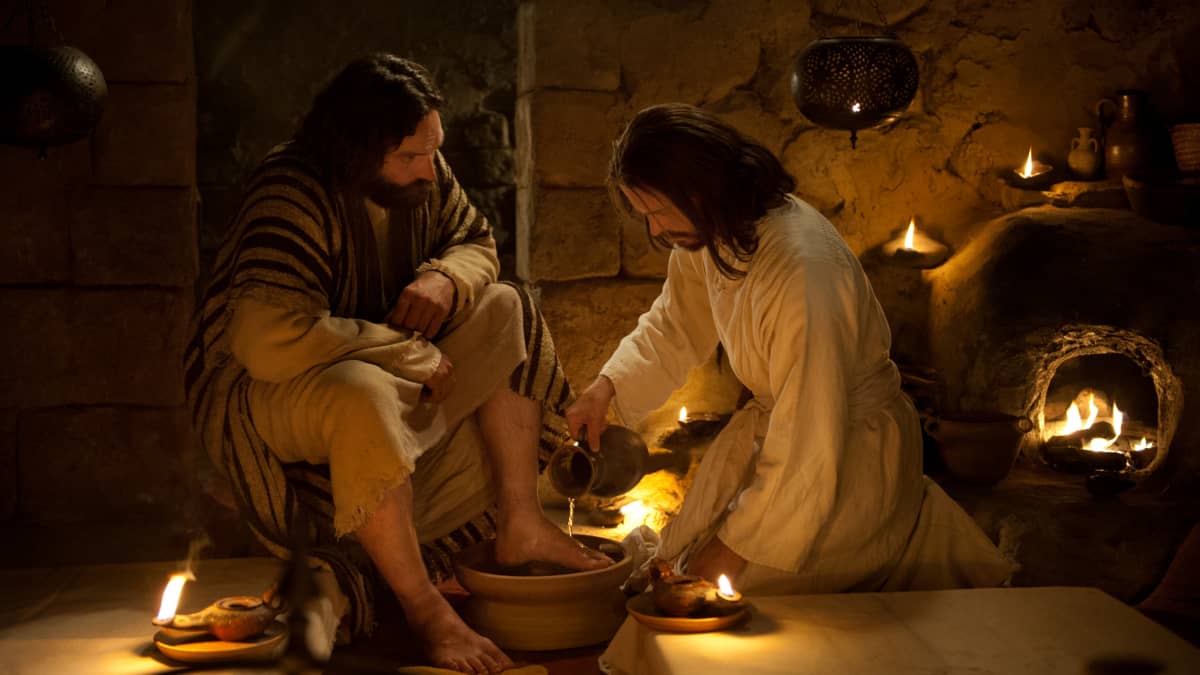
Living to serve others. That is the goal all Christians must pursue! To serve others requires self-sacrifice, humility, patience, and love. The servant of a king or queen finds their joy in attending to the monarch. And as Christians, our joy comes from attending to the matters that our King, Jesus Christ, has asked us to.
A warning, however, should be issued here and now. Those who commit to serve others must be ready for the crucible of suffering, just a Jesus Christ was. He learned surrender by going through suffering. We too, if committed to serve, will suffer. We may suffer misunderstanding or stereotyping when people see we don’t stand up to “demand our rights.” We may suffer when others don’t ask our opinions or order us around. Paul put it this way:
For it has been granted to you that for the sake of Christ you should not only believe in him but also suffer for his sake, engaged in the same conflict that you saw I had and now hear that I still have (English Standard Version, 2016, Phil. 1:29-30).
Why is the matter of maturity so central to the exercise of spiritual gifts? In almost every one of his letters, the Apostle Paul refers to the need to live as imitators of the Father, or to walk in the Spirit, to live in submission to the Holy Spirit, to put on the “new person” (that is, cover oneself with the Holy Spirit), and so on. Each of the churches in the early New Testament period where learning how to live a mature follower of Christ. This verse sums it up:
“The natural person does not accept the things of the Spirit of God, for they are folly to him, and he is not able to understand them because they are spiritually discerned. 15 The spiritual person judges all things, but is himself to be judged by no one. 16 “For who has understood the mind of the Lord so as to instruct him?” But we have the mind of Christ.” (English Standard Version, 2016, 1 Cor. 2:15-16)
Let me quote the chapter called “How can Christians be Spiritually Minded?” where I put the spotlight on this topic of spiritual gifts as an expression of maturity. On page 26, we see this:
“True spirituality can only be obtained with the Spirit dwelling in us. For this reason Paul clearly says, “…you are not in the flesh but in the Spirit, if indeed the Spirit of God dwells in you. But if anyone does not have the Spirit of Christ, he does not belong to Him (Rom. 8:9). 1 Corinthians 2:12 says, “…so that we may know the things freely given to us by God, which things we also speak, not in words taught by human wisdom, but in those taught by the Spirit, combining spiritual thoughts with spiritual words.” If the Spirit of God is not present and fully in control of the Christian, He cannot teach one how to speak, how to act nor how to live. On the other hand, as a Christian learns to submit to the Spirit’s leading they become capable of speaking and acting as God planned. Thus, the spiritual person is characterized by godly speech and by thought patterns and life choices that reflect the Spirit’s control in their life.” (Spiritual Gifts, Identify and Use them through the P.R.I.Z.M. of God’s Grace, David L. Rogers, WestBow Press, 2023, p. 26).
That pretty much sums it up!
If you want to understand the differences between false and true spirituality, if you want to know how to develop Christian maturity, please click on this link and get a copy of my new book, SPIRITUAL GIFTS, IDENTIFY AND USE THEM THROUGH THE P.R.I.Z.M. OF GOD’S GRACE.
Thank for you reading this blog. But especially, thank you for pursuing a life of grace and maturity in Christ. The Body of Christ will thank you too!
David L. Rogers, M.A. Min
Laurel Springs, NJ USA


 Walk a Missionary Mile with David Rogers