The Beauty of the Body of Christ

The Body of Christ is the Local Church: Gifts belong there.

In the process of discovering, understanding and unwrapping your spiritual gifts you need to keep in focus these two major questions:

  1. What is the biblical definition of a Spiritual Gift?
  2. What is the design function that Spiritual Gifts play in the Body of Christ Jesus, called the local church?

These two points give direction and clarity to anyone trying to learn how gifts operate and what gifts mean in the life of the Christian. When a believer in Christ sees the answer to these two questions building on the Biblical definition and development, he or she will exercise to discover them, and in turn lead to more feasible, more objective, and more possible results, fruit, lives changed.

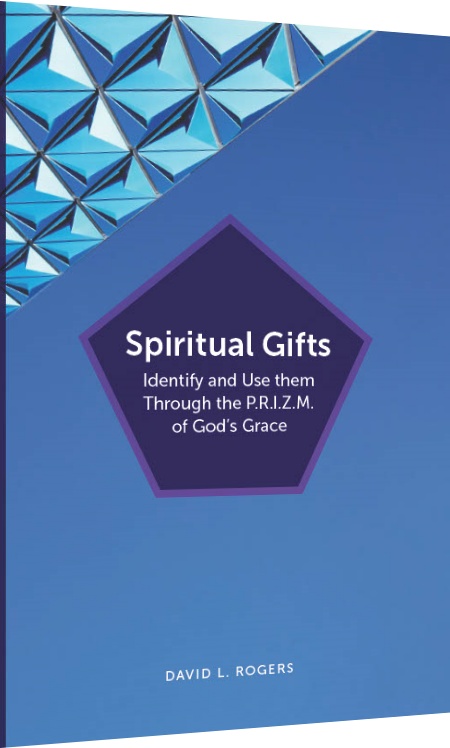
In pages 42-46 of my book Spiritual Gifts, Identify and Use them Through the P.R.I.Z.M. of God’s Grace, you will find how I develop more fully these two ideas. What follows is a simple summary in answer to the two questions above.

“The first significant consideration is the meaning of the terms used to describe spiritual gifts.The New Testament employs two root words for the English word gift. They are charisma and domata. Charisma comes from the root word charis which refers to God’s unmerited grace given to the believer when trusting in Christ to save from the just punishment that sin deserves. The root of charis refers to

…that which delights one. It may be a state which causes or a condition that accompanies joy. It is joyous being or charm as the element of delight in the beautiful, the favor shown by fortune, i.e., what is pleasing in it” (Kittel, 1985, p. 1306).

Summarizing these thoughts, a simple definition of a spiritual gift is that unique, God-given capacity for serving the Body of Christ which becomes a special means of glorifying God.”

In other words, the saving grace, as understood in his undeserved divulging of all His love, grace and forgiveness through the person of Jesus Christ, is the same grace that equips the Christian to love Him, to love in response to His love.  That is why the Beloved Apostle John, centered his first letter on how the truth that “we loved [Him] because He first loved us” (1st John 4:19)

Photo by Engin Akyurt on Pexels.com

Secondly, “The [other] term (charis) highlights the truth that God lovingly grants His children gifts that put them on display as pleasing and favored in His sight. In the Word of God, it is His charis (grace) that frees the believer from ever having to think again that he or she must earn His favor. Why? Because the whole gift of salvation is charisma(2 Cor. 1:11; cf. Rom. 5:15–16 emphasis added)” (D.A. Carson, Showing the Spirit, 1987, p. 22). In other words, salvation through faith in Jesus Christ fills the believer with His grace, which is the theological cause which imparts the spiritual gifts.

As God freely pours out His grace, saving the repentant sinner, He also grants the resources for service which, as time progresses, ought to grow and flourish through the work of the Holy Spirit in the believer’s life.

The second word in Greek is the “Domata.”

 “The Greek word domata can be translated “present, gift.” This word is used in the Pauline writings to mean the grace of God manifested in the various avenues through which God demonstrates His work and will. The gift comes through His gracious act of putting His grace on display through the vessel wherein He has placed that grace, namely those who believe and are regenerated by the work of the Holy Spirit. The Apostle Peter calls this the manifold grace of God that a Christian receives through Christ, grace that reflects an array of dimensions and facets (see 1 Pet. 4:10).”

But, if a Christian fails to understand the Gift itself, it might not be because they do not know the above definitions or biblical ideas. It may be for a must more “down to earth” reason. What could that reason be? Because they have become disconnected, or unrelated to a local body of Christians. It is by means of God’s grace manifested in and through other believes that we learn how beautiful God’s gifts to the Body really are!

Photo by Pixabay on Pexels.com

A gift means little or nothing outside of a body of believers where it can be identified and exercised in the local Church. In the local church a person’s spiritual walk is built up, evaluated, enriched and nurtured. Gifts make the most impact in a Church! “Both terms (charismata and domata) clearly point to the truth that gifts are given by the Lord’s Spirit to the believer based on His choice alone. Likewise, each gift brings inherent with it a design and a purpose. Gifts are part of the overall work of salvation God is carrying out through the church. Therefore, spiritual gifts are to bring glory to God Himself, not the recipient. It is not what God intended that we should ask for a certain or specific gifts.” (p. 46, Spiritual Gifts, Identify and use them Through the P.R.I.Z.M. of God’s Grace, 2023, David L. Rogers).

This truth about spiritual gifts may startle or even leave some unquiet. But through the interaction and guidance of mature Christians, the young Christian learns how gifts form an integral part their function in the local Church. Christians NEED the local Church to exercise and evaluate their gifts, in the same way that our hands, feet, ears and neck need the body to fulfill its design.

As a result, let’s be clear about this point: spiritual gifts function in the context of a local body of Christians, in which the Christian is a stable member of, and a faithful contributor to the work of the Church. Gifts are given to Christians by the Lord Jesus through His Spirit, to the Body of Christ, the most beautiful, tangible, and VISIBLE way for Christ to make Himself know to the world today!

Want to learn more about spiritual gifts? Please visit this link where you can obtain my book on the topic.

Posted in Articles of Interest, Home Page | Tagged , , , , , , | Leave a comment

Christ-Likeness, What is a Christian to Do, to Say, to Think?

Think with me for a moment about a time when you were in the presence of an adult, say in their 20s or 30s, but who was putting on a show, who was having a “melt down” or who was demanding that others give in to their whims. What was it like? Uncomfortable, right? That’s because we all have a set of expectations that guide what and how a mature adult does, says, or how they act. The point is maturity is usually recognizable. And so is immaturity!

Immaturity was part of the problem for the first churches that were started in the New Testament period. In the book of Acts the travels of the first missionaries Paul and Barnabas, stir the heart and imagination of many who have lived or served overseas for any period of time. The thing is, Paul and Barnabas as church planting missionaries saw more than a little bit of immaturity! They were present in the beginning as people place their faith in the Risen Lord Jesus Christ. And they came back time and time again to instruct them how to live out their faith.

The book of 1st Corinthians addresses the topic of maturity in depth. There are several chapters dedicated to the topic and they are commonly called the chapters on spiritual gifts.  The point we need to notice, however, is that the general theme of the letter of 1st Corinthians is really how a Christian distinguishes themselves from the world by their conduct. What is the most distinguishing factor? They live, think, and talk with “the mind of Christ” (1 Cor. 2:16). What does it meant to “have the mind of Christ”? This is Paul’s way of describing the mature, growing, adult-like Christian. They are mature, they act and think along the same lines as the Lord Jesus. Not that they are perfect, for we remain fallen until heaven, but they live with their focus on being like Christ.

What is the most outstanding quality of the LIFE of Christ? I am not thinking of his crucifixion or His resurrection, for these two facts are, undoubtedly, the most important part of his time on earth. But HOW DID CHRIST LIVE? He served others! That is what makes Christ’s life so powerful and so attractive. Even His enemies could not deny that he served the needy, the poor, the sick, the underprivileged and—believe it or not—He served the sinners in his life!

This is the heart of spiritual gifts. It is living with the same dependence on the Holy Spirit so that all we do looks like, and reflects, the person of Christ. The point we must really take time to examine when discussing spiritual gifts is this: do we live to serve others? Or do we live expecting others to serve us?

Living to serve others. That is the goal all Christians must pursue! To serve others requires self-sacrifice, humility, patience, and love. The servant of a king or queen finds their joy in attending to the monarch. And as Christians, our joy comes from attending to the matters that our King, Jesus Christ, has asked us to.

A warning, however, should be issued here and now. Those who commit to serve others must be ready for the crucible of suffering, just a Jesus Christ was. He learned surrender by going through suffering. We too, if committed to serve, will suffer. We may suffer misunderstanding or stereotyping when people see we don’t stand up to “demand our rights.” We may suffer when others don’t ask our opinions or order us around. Paul put it this way:

For it has been granted to you that for the sake of Christ you should not only believe in him but also suffer for his sake, engaged in the same conflict that you saw I had and now hear that I still have (English Standard Version, 2016, Phil. 1:29-30).

Why is the matter of maturity so central to the exercise of spiritual gifts? In almost every one of his letters, the Apostle Paul refers to the need to live as imitators of the Father, or to walk in the Spirit, to live in submission to the Holy Spirit, to put on the “new person” (that is, cover oneself with the Holy Spirit), and so on. Each of the churches in the early New Testament period where learning how to live a mature follower of Christ. This verse sums it up:

“The natural person does not accept the things of the Spirit of God, for they are folly to him, and he is not able to understand them because they are spiritually discerned. 15 The spiritual person judges all things, but is himself to be judged by no one. 16 “For who has understood the mind of the Lord so as to instruct him?” But we have the mind of Christ.” (English Standard Version, 2016, 1 Cor. 2:15-16)

Let me quote the chapter called “How can Christians be Spiritually Minded?” where I put the spotlight on this topic of spiritual gifts as an expression of maturity. On page 26, we see this:

“True spirituality can only be obtained with the Spirit dwelling in us. For this reason Paul clearly says, “…you are not in the flesh but in the Spirit, if indeed the Spirit of God dwells in you. But if anyone does not have the Spirit of Christ, he does not belong to Him (Rom. 8:9). 1 Corinthians 2:12 says, “…so that we may know the things freely given to us by God, which things we also speak, not in words taught by human wisdom, but in those taught by the Spirit, combining spiritual thoughts with spiritual words.” If the Spirit of God is not present and fully in control of the Christian, He cannot teach one how to speak, how to act nor how to live. On the other hand, as a Christian learns to submit to the Spirit’s leading they become capable of speaking and acting as God planned. Thus, the spiritual person is characterized by godly speech and by thought patterns and life choices that reflect the Spirit’s control in their life.” (Spiritual Gifts, Identify and Use them through the P.R.I.Z.M. of God’s Grace, David L. Rogers, WestBow Press, 2023, p. 26).

That pretty much sums it up!

If you want to understand the differences between false and true spirituality, if you want to know how to develop Christian maturity, please click on this link and get a copy of my new book, SPIRITUAL GIFTS, IDENTIFY AND USE THEM THROUGH THE P.R.I.Z.M. OF GOD’S GRACE.

Thank for you reading this blog. But especially, thank you for pursuing a life of grace and maturity in Christ. The Body of Christ will thank you too!

Posted in Home Page, Publications | Tagged , , , , , , , | Leave a comment

** Do Not Neglect the Spiritual Gift Within You **

I just finished the final proof check of my new book on spiritual gifts a few weeks ago. I am THRILLED! But, there is something I have to confess to you. Even though I am convinced of just how valuable and incentivizing the book can be to many, I am guessing that the book will be passed over by many. Why? It’s simple: some Christians may not even know that they HAVE spiritual gifts. Others consider the topic off limits. And still others, in a flurry of emotion, will expect a kind of “epiphany” IN PLACE of the time to pray, to study or to learn about spiritual gifts. The exhortation to one generation, 2,000 years ago, stands in every way, valid for today’s Church. Paul said it to Timothy this way, “

Do not neglect the spiritual gift you received...Give your complete attention to these matters. Throw yourself into your tasks so that everyone will see your progress. Keep a close watch on how you live and on your teaching. Stay true to what is right for the sake of your own salvation and the salvation of those who hear you.

Tyndale House Publishers, Holy Bible: New Living Translation, 1 Tim. 4:14–16.

What does it mean to “neglect the spiritual gift” we have as Christians? For starters, it means that we worry about numbers, statistics, programming and processes more than we consider spiritual fruit. We live to “DO” stuff, but not to “GROW” fruit! We live full of ourselves, our needs, our burdens, or our hopes. But forget, sometimes intentionally, that the REASON we have been left on earth as Christians is to “bear fruit.” That is what a spiritual gift produces.

Maybe you are like I had been for many years. I lived the first 15 years of my Christian life without much fruit or spiritual discipline. The fact is, the extent of my spiritual exercise and discipline amounted to not more than an occasional “good work” for someone or with a group of Christians. My spiritual life could be reduced to about 60 minutes once a week. Not much of fruitfulness.

Why should we not neglect spiritual gifts? I have discovered four important reasons. I will share two of them here today, and two in a future post.

First, neglecting spiritual gifts will noticeably reduce your fruit in the Christian life. It is like a poorly pruned apple or peach tree…the tree will have lots of pretty leaves! But very little fruit to enjoy. What is worse, something or someone will take the place in your life of being fruitful, of influencing or uplifting others, and cause you to feel a variety of other things in its place. When no fruit is visible (either by manifesting Christian character or in serving others), the almost immediate response is to use substitutes in place of the fruit.

You feel, for instance, that you cannot match the productivity, the following, or the changes in lives that some others do. You feel frustrated because it seems like God is not working through you. What causes this? The nagging idea that you have to measure up or imitate the really spiritual Christians. The problem is that you become pre-occupied with externals, you reach a point of stagnation and you loose hope that God will every do anything noticeable through you. You have become ensnared in the routine and the mechanics, without real results in the lives of others.

Second, by properly employing spiritual gifts, you and others can observe the working of the Holy Spirit. But, on the other hand, if because we only see a life of fruitlessness or weakness, we may lose hope that God can work through and in us, and the consequence is we become doubtful that the Holy Spirit, God’s gifted Comforter, our Guide and Teacher, is present. The problem is, if we give up on sharing our spiritual gift–we neglect it–then the evidence of the Holy Spirit working is practically non-visible. At the least, it becomes a matter of questioning when, how and where the Spirit works in us as Christians.

I personally believe that this is the most frequent cause that Christians lack joy and peace! They do not see God at work. They do not know how to submit or even recognize the way the Spirit leads or teaches. The Spirit is sort of a stranger, a distant “presence.” but NOT the One whom Christ sent to console, empower, enlighten us! With regular submission to the Spirit, we will observe concrete results in our minds, and more importantly, in our service as believers! (see Eph. 1:17-21).

What we must pursue is a life of walking in the Spirit, which means we believers in the Lord Jesus Christ employ spiritual gifts as He designed us to. Here are a few of the exciting results we will see:

  • We have a desire to OBEY God.
  • We experience JOY in God and with other Christians
  • We sense the UNITY of the Spirit in the Church
  • We mature in the FAITH.
  • And, we see FRUIT–results–through serving others.

If these evidences of the Holy Spirit are not present in your life, take time to examine yourself to see why, to investigate what is missing!

To help you investigate, let me encourage you to get a copy of my newly completed, and soon to be published book SPIRITUAL GIFTS, IDENTIFY & USE THEM THROUGH THE P.R.I.Z.M. OF GOD’S GRACE (Copyright 2023 David L. Rogers) Please complete the form here in my Blog to request an order, PRE-Printing (*that is, in anticipation of the printing, scheduled for the fall of 2023).

Designed to walk you through FIVE concise questionnaires, this book offers practice, time-tested tools to help you identify and use your spiritual gifts. You’ll find tools to guide you to understand why gifts are important, what are the prerequisites to consider, how gifts are anchored in your character, and other simple steps.

Get your copy by reserving it now! You will receive an email notifying you when they are available. Please fill out the form by visiting the tab “COMING SOON” on my blog.

The Word of God dedicates over 75 verses to the important topic of Spiritual Gifts. It is time we took it seriously! It is time to take note of what the apostles Paul, Peter, and John highlighted as the foundation of how each believer adds to, builds up, enriches and completes the church! There is no time to waste!

Be on the lookout for more posts here about this foundational matter in the next weeks and months. You will find simple, clear concepts from the Bible that can make a huge impact in your life and service for the Lord.

Posted in Articles of Interest, Publications | Tagged , , , , , , , , , | Leave a comment

How Many Seconds Will you Spare?

Posted in Home Page | Tagged , , , , , , | Leave a comment

The Israel – Hamas War Has Pulled back the Blinders

Okay, I will confess, I am terrible at blogging! I have had this site for years now, and if I go by the number of followers it has, it’s a complete washout. If I go by the number of comments made, it looks like I am living on a different planet. And if I measure it by the number of posts, well, enough said.

So why keep posting? Why keep writing? Because there are things that must be said. And what I want to say today is one of those points. I need to speak about the Israel-Hamas war. The war, which is now in its 290th day (as of 7/19/24), seems to still not be comprehended by many. This war will change the landscape of the middle east forever, and yet common opinion, derived from politically motivated reasons, is miles, maybe even light years, away from its true significance.

The war began on October 7, 2023. But, the apparent motive, a response to the massacre of nearly 1,200 innocent, unprepared, and blissfully ignorant Jews, only points to a greater truth: Israel has been at war since 1967, defending its right to a homeland. The war also illustrates a turning point in the past 18 years of Hamas’ subversive plan, laid in secret, financed by foreign funds (the glaring fact of arms caches hidden under UNRWA schools in Gaza is damming!), and prepared with the utmost calm and patience. Islam is a religion of patience, after all. Look at how the Ottoman empire revived is sweeping into Western Europe! Islam will flood Europe. But this time, not with swords and spears, but rather, with a “peaceful overthrow.” Islam knows its enemies. Islam has defied democratic systems and will destroy any country that gets in its way. Israel is facing that right now.

Photo Credit: USA Today

But what is the underlying cause and how do I interpret this war? Let me share the following quote to introduce a historical perspective. Blaise Pascal is quoted as saying, “Muhammed established a religion by putting his enemies to death; Jesus Christ (established a religion) by commanding his followers to lay down their lives.” (Blaise Pascal, Isaac Taylor (1838). “Thoughts on Religion and Philosophy”, p.202)

Now that gives clarity to this war!

What to say about the country of Israel? One simple fact to bear in mind: Israel’s founding was a miracle. After more than 1800 years with no functioning state or political identity, Israel rose from the dust as a rest of the Balfour Accord in 1947. This stands in sharp contrast to the present-day Shiite regimen in Iran and Iraq and the Sunni state in countries like Turkey, Saudi Arabia, Egypt, Yemen, Pakistan, Indonesia, Algeria, Morocco and Tunisia. Said countries have remained intact since the following of the fall of the Ottoman Empire, but not as any sort of unified Muslim belief system.

Of course, it is critical to understand that the division between Shiite Islam and Sunni Islam stand oceans apart when it come to their views on western culture, democracy and especially, how to view the resurgence of Israel as a nation. The moderate Muslim view on Israel was enshrined in the Marrakesh Declaration in 2016, which condemned radical Islam’s treatment of religions other than Islam. An example of this treatment was seen in the public celebration of the Roman Catholic mass in Amman, Jordan in January 2016. Just eight years later, yet the pope has offered once again overtures to the Muslim states, when Pope Francis met with Muslim scholars at  the Catholic Centre for Studies and Media from Jordan, during their visit to the Vatican in September 2023. Note that this meeting took place only 9 days before the brutal attack on Israel, October 7.

While a rising tide of ecumenical spirit grows in the Roman Catholic circles, seeking to reach out to Muslim countries, the church’s faithful are often the target of attacks, of bombings, of persecution and of brutal treatment by Islam jihadists. There is no sign of peace soon. And any alert and informed believer in God’s Word should understand why.

More important concerning this present war, though, is the present mixed messages and cool indifference of these Muslim states since the “10/7” carnage in Israel. And that is why the western world, including Christians, are still scratching their heads about what to do with Hamas, Hezbollah, the Houthis and in general. These proxies of the Islam Republic of Iran are 100% determined to erase Israel off the map. And some thought that the Middle East was finally getting along!

Pascal recognized a fundamental difference between Islam’s founding principles (in a single, well-worn word, “jihad”) and Christianity’s principles (in a word, the “Golden Rule” or better, in the words of Jesus Christ, “Blessed are the meek…Blessed are the peacemakers…” Matt. 6:5, 9).

Thus, we do well to remember that Mohammed used intimidation, forced submission and extermination to achieve his purposes. However, Israel operates on a different mindset, something rooted in God’s promises to bless those that bless Israel and curse those that curse Israel. Christianity grew from that promise, for the simple reason that the Savior of the world was a Jew. Jesus’ blessings and peacemaking were not achieved through the use of force. They were promoted through service and through humbly giving His life to rescue the sinner.

Sinners, after all, is what both Muslims and Jews and those who don’t fit in either category finally are (that would be all other nationalities, all other races, all other people groups). We are ALL SINNERS. And that determines how to proceed from day one.

In summary, The Israel – Hamas war reveals that Israel’s identity proceeds from a vastly different worldview of mankind in contrast to the beliefs of Islam. Second, the war also proves that showing friendly gestures to Sunni Muslims does little to defend Israel as a state or a people. And third, the war will continue to rain destruction down on God’s chosen people, until God Himself sends the coming King of Israel to set things in order. May believers in Christ’s commands speak of His coming, while there is still time! Let it ring out that Jesus Christ is King…of both Jews, Muslims and every other peoples on earth!

If we do not, then our willful resistance will only make that day of revelation more painful for this world.

Posted in Articles of Interest | Tagged , , , , , , , , , , , , | Leave a comment

** Do Not Neglect Gifts, Rather Nurture the Kingdom **

Last week I introduced my new book, called SPIRITUAL GIFTS, IDENTIFY & USE THEM THROUGH THE P.R.I.Z.M OF GOD’S GRACE, which is just a short time away from being published. I can’t wait! Did you look at my “Coming Soon” tab on this blog? That is where you can see a short summary, and request information about the book. But that is not what I have to tell you today. The point of this short blog can be summarized in two words: nurture and mature in grace.

To Nurture something is to feed it properly, to protect and care for it, to watch it grow, and to give it your attention. This points out a third reason why the believer should not neglect the gifts they have received. By nurturing, we refer to taking a personal interest in and investing oneself in the kingdom of God. Christians, our spiritual gifts will nurture the church, the work of building up the kingdom of heaven, when we properly use and identify them. Nurture comes through patient and informed service of others. We nurture the kingdom of God by investing in its growth, locally and globally. This is a third motive to not neglect spiritual gifts.

In his magisterial letter to the Christians in Rome in the first century, the emphasis Paul gave was to point out “to everyone among you not to think of himself more highly than he ought to think, but to think with sober judgment, each according to the measure of faith that God has assigned.” (Rom. 12:3, ESV) Proper judgement properly exercised leads to one’s spiritual gifts being properly utilized. Gifts keep the Christian focused on others, not self.

Osorno Volcano, Puerto Varas, Chile
Osorno Volcano, Puerto Varas Chile. Photo by David Lynn Rogers, (c) 2023

Paul follows it up and makes the following: “Having gifts that differ according to the grace given to us, let us use them...” (Rom. 12:6a). Gifts can only build the kingdom when they are identified using a biblical perspective, and then trained or developed through diligent, unified and loving practice.

From there, the believer will see the work of the Holy Spirit through him or her, will come to value the dependence on the Spirit more and will love to bring Christ glory through the humble use of their gifts. In other words, the fourth reason to not neglect ones’ spiritual gifts is that through them the Grace of Christ Jesus will be expressed in tangible ways.

I could name dozens of people, both in the United States and in Chile (where we have lived and trained others for about 38 years) who grew measurably because they finally had a grip on the concepts that determine using spiritual gifts! Here is one example. I will call this person Rafael. Rafael came to trust Christ as Savior as a teen. He became active in the particular kind of church which primarily saw gifts as means to do tremendous, outstanding, and miraculous works! They really only emphasized the sign gifts (miracles, healing, speaking in a foreign language…), leaving most of the church wishing they could be like the dynamic and dramatic preachers that taught them spiritual gifts were out of their control, and that they should pray for one primary gift: speaking in an unknown language. The other gifts were ignored much of the time.

Rafael wanted to serve the Lord and he had a calling to be a pastor, but had reached the erroneous conclusion that if he did not perform strange activities or speak in strange languages, that he could not rise to the place of pastoring . He resigned himself to just studying the Bible, to that “not so glamourous” activity of evangelizing, and left the leadership to others. His gifts were unknown to him or others.

For many years this is how Rafael lived out his faith. But what he was lacking was the evidence of spiritual FRUIT (see previous blog on this point). Fruit had been lacking, and as a result, so was the desire to serve in grace.

But then Rafael was challenged by me, when we visited our church after having left the previous one, that maybe his gifts were not clearly identified and that maybe he did not see himself as a fruitful believer because he was attempting to imitate others, rather than discover and perfected his own spiritual gifts package. That led to us spending over a year studying the Scriptures regarding this topic. After working through 3 different evaluations and questionnaires under my guidance, Rafael could see his pattern, and others could see it too. His gifts had been neglected all along, and it was clear that his spiritual gift was that of teaching and evangelizing.

Soon Rafael was holding Bible studies in homes, visiting unbelievers and answering their questions and soon people where placing their faith in Christ and following Him in obedience! His gifts exercised in dependence on the Spirit reflected the grace of Christ and brought spiritual fruit. Today Rafael is a part of a pastoral staff in Santiago, where he is well suited to pastor, to teach and to evangelize.

You can identify and use your spiritual, divine capabilities that God has granted for the sake of nurturing the kingdom, and for maturing in grace! Start today by ordering a copy of my book: SPIRITUAL GIFTS, IDENTIFY AND USE THEM THROUGH THE P.R.I.Z.M. OF GOD’S GRACE.

Click on this link to go to the order form.

Posted in Articles of Interest, Publications | Tagged , , , , , , , | 2 Comments

Four Reasons to Avoid Clutter in your House–and Your Life

I write this blog post from New Jersey. In March my family and I returned to the United States to complete our habitual Home Ministry, the time formerly called “furlough.” Our family has changed in so many ways! And one of those is the fact that two of our children moved into a different houses. One moved several states away and the other within the same state. Now they have experience with the same reality that for decades, we have dealt with in Chile. It’s called the build up of clutter!

Moving obligates one to clean out clutter, to choose between what is useful and what is not. It also provides a chance to ask, “What is the purpose of holding onto this stuff?” That’s a good question for all of us to ask on a regular basis! We need to be aware of the fact the tentacles of the world continually grasp to hold us down, to anchor our lives in the present, and to make us ignore the future. While the accumulation of stuff is a reality due to the family advancing through stages of growth, the problem with it is that we tend to want to hold on the the STUFF and the PAST at the same time.

That is the danger. The more we accumulate, the more we are pulled backward.

While cleaning out our public storage unit, one we had rented for about 7 years, several lessons came to mind. I would like to share a few here, in an attempt to help us all live our Christian calling more effectively.

REASON #1

The retention of clutter generates a cost. It costs time to sort and to clean out. It costs money to rent the space or to use space that might be more effectively adapted to other uses. And it costs emotional energy. We live out every memory when we unload, sort and clean out the knick-knacks, the clothes or the toys. Would it not be more valuable for to give them to someone who can still get some use out of them? By removing clutter, you free yourself to be a “giver” and not a “keeper.” That opens up the way to see how God uses you to bless others, rather than hang onto the past.

REASON #2

Holding onto clutter sometimes gets in the way of the more important things…like the person who gave it to you or the lessons to be learned from them. The space, the work, and the maintenance of a pile of clutter or of old, worn out items eventually becomes the more important task. What we ought to seek to carry with us is the lessons, the insight and the love that the person who gave it to us or from whom it was passed along, demonstrated at that moment. The OBJECT is not more valuable than the GIVER.

However, if you are like me, the object often triggers the memory and can help “transport” you back to the time when it was a daily interaction. So, if that is the case with you, then try to put a little sticker on the back of the item with a short phrase to remind you and others, WHY this stuff has sentimental value. In other words, don’t let the lesson be lost on the item. Keep them both in focus.

REASON #3

Maintain a proper perspective on all items. The things are temporary, no matter how valuable or how precious. We look at a grand father clock or a broach and think, “this is worth something!” Sure, it may be. But the fact is, gold and silver and precious stones all fade in value. But the souls of men and women are eternal. That means your soul and those of your descendants. To make a statement of real worth, implement in your daily practice the value scale that Christ used: “Lay up for yourselves treasures in heaven where moth and rust do not corrupt.” (Matt. 6:19) The stuff that really lasts is already in glory! You don’t have to worry about losing what’s there!

Photo by Kalapuri Store on Pexels.com

REASON #4

Frequently the problem with the stuff we accumulate is not the actual physical value or the meaning. Things may prohibit us from obeying the Lord Jesus Christ who clearly stated to the rich young man,

“When Jesus heard this, he said to him, “One thing you still lack. Sell all that you have and distribute to the poor, and you will have treasure in heaven; and come, follow me.” But when he heard these things, he became very sad, for he was extremely rich. Jesus, seeing that he had become sad, said, “How difficult it is for those who have wealth to enter the kingdom of God!” (English Standard Version, Lk 18:22–24)

“Learn to travel light.
You will not tire as much and
you will live with greater joy.”

This man’s wealth blocked him from obeying Christ. I am certain that at times in my life, my “stuff” has blocked me from obeying Him too. Like when I take time to check my bank balance instead of praying. Or when I spend hours online searching for the “best deal” when I could better use that time giving others the Gospel or sharing a word of encouragement.

Since we all know that stuff can weigh more and more the more we value it, I find it helpful to remember the wise words a former Regional Director of South America with ABWE who told me: “Learn to travel lite. You will not tire as much and you will live more joyfully.” Thank you Dr. and Mrs. Art Cavey! Those are wise words of advice!

Perhaps you and I would do well to have a “clutter clean out day” yearly! It may help us live and travel through this world lightly, and freely. If Christ Jesus himself lived this way, we certainly ought to seek to emulate Him as much as possible.

David L. Rogers
Clementon, NJ

Posted in Articles of Interest, Home Page | Tagged , , , , , , , , , | 2 Comments

The Very Next Thing…for 2021…or for Whenever

When 2021 began my thoughts along the topic of a new year arriving reflect the struggle we had then, and from which we are not fully free yet.

Here is how I started a new post then:

“The new year has begun, and here is where we are:

— No internet in our house for the past 21 days (in spite of visits from 6 company technicians, and multiple calls to the internet provider!).

— The city of Santiago is back in quarantine on the weekends, meaning there is not going out of the house without a police permit.

— A vacation trip we had planned to the northern city of Iquique was cancelled by the airline.

This song expresses our feelings, not only today, but in many moments during this pandemic. Perhaps they will speak purpose and decision into your day too:

“I spend all my time,
Dreaming what the future’s gonna bring.
When all of this time,
There’s a world passing by right in front of me.
Set my sights on tomorrow,
While I’m tripping over today.


Who says big things,
Are somewhere off in the distance.
I don’t want to look back,
Just to see all the times, that I missed it.
I want to be here and now,
Starting right here, right now.

With the very next words,
Of love to be spoken.
To the very next heart,
That’s shattered and broken.
To the very next way,
You’re gonna use me.
Show me the next thing,
I’ll do the next thing.
“*

Photo by Quang Nguyen Vinh on Pexels.com

How often during these 18 months of quarantine have I had to recalibrate my plans. How often has government restrictions on public meetings made personal interaction and fellowship impossible. How many cancelled plans and trips have made me put something on hold! So now, today, and often, I repeat these words to myself! Not only to myself, but to our family, enclosed and cloistered, in the long periods of waiting.

This brief reflection was written in February 2021. But I still chose to publish it for a couple reasons:

  • I am reminded that every day is a gift from the hand of God. Whether in lockdown or on vacation (we did take trip this year in January! 2022), our lives are in His hands.
  • The brevity of life means we don’t live anticipating something off in the near or distant future. We live to bring life, hope, and the Gospel of Jesus Christ to everyone near us–TODAY!
  • And especially because we have come to see how shattered and broken the world really is…which is why we are here in Santiago, Chile in the first place.

The very next thing is indeed the most important thing God asks of you. Keep watch…and obey.

David L. Rogers

Now, having dealt a full 22 months with the virus, and rounding the corner for 23 months, as of February 2022, our world still struggles with fear from the virus of COVID-19. Yesterday’s worship service had almost as many people present at the church building as were present online. This would not be a concern, except for at least three of those families have said they will not return to in-house services “until this thing is over.” Just how long will that be?

The fact of the matter is, ministry has changed permanently, or so it seems. Life has changed permanently in many ways. And change after change still is redirecting or reshaping our lives. Now the question is simply: how do we make the most of the reality we now live with?

One way to make the most of our new reality is to work extra hard at intersecting with those people who are nearest, those whom you see most often. In other words, work to sure that each time, as many or as few time that you meet, that you take time to talk about eternity!

Another way is to purposefully reach out to those you know in similar situations. Our national Chilean pastors and their families have all faced hardship in some way or another. Thus, we can make it a point to help them bear their burdens by showing our concern through a personal note, a call or a visit.

Finally, we can make good use of the “new normal” by explaining to our own families how to be alerted to the unexpected opportunities. This coming Sunday is Super Bowl 2022, and our ministry team have all been invited over to our home to share the game together. But not only missionaries are being invitied, so are our Chilean brethren. Most of them say the “do not understand American football,” but I am sure that they will understand the language of fellowship in Christ that we can share with them while watching it…not to mention a few laughs as we see their puzzled look on their face about what a “saftey” is or why the punter kicked the ball after just 3 downs!

David L. Rogers, M.A. Min,

Santiago, Chile

  • Lyrics by Bernie Herms / John Mark Hall / Matthew Joseph West, Casting Crowns. The Very Next Thing © G650 Music, Pure Note Music, Highly Combustible Music, House Of Story Music Publishing, Songs Of Universal Inc., One77 Songs.
Posted in Articles of Interest | Tagged , , , , | 1 Comment

How to Keep your Missionaries Healthy and Happy

Do you really want to know the answer to this question?

Okay, here we go! First, find out what they need, what are their health issues, and ask what are their limitations. Now I am not only referring to dietary needs. I am speaking of spiritual and emotional needs. Add to those their family needs and their financial needs, and you will have a full course meal…of ways to encourage your missionaries.

Now don’t get me wrong, no missionary expects you to meet all those needs! You can just take a stab at one on them or perhaps two, and you will see a grateful response. And when he or she senses that you are genuinely interested in their well being, that alone will make all the difference in the world.

Second , after becoming intelligently informed about their needs, move toward a closer step of involvement. Ask him or her something like “what are your concerns about the future, or about your family or your ministry?” The question may provide some great conversation, and that is a time where you can listen, observe, probe if necessary and especially uplift. Some of our missionary colleagues have confided in us, upon returning to Chile after a furlough, that no one really stopped to listen, or to open the topics of heart-felt concern in their lives. Most church-goers were content to let the conversation stay on the superficial level. They missed the chance to provide care and encouragement to a person who really needed it.

Third, a missionary’s spiritual, emotional and family health depend on relationships in their country of service. Therefore, to encourage and to build up a missionary, ask how close he or she is with his or her fellow colleagues. Ask something like, “what do you do for fun with your missionary team?” Or ask, “what would be a favorite memory of time spent with your mission team?”

Ask things like “do you and you children have regular time to relax, play, learn and worship together?” The pressures of life in another country (like travel in a large city which can absorb large amounts of time and energy) coupled with the burden of needs and struggles of those they are discipling wears on emotions and spirit. This is why it is crucial for a family, a husband and wife and single missionaries to set aside regular time to renew themselves.

Missionaries and friends

Visiting Work Team from Cherry Hill, NJ, out to see the Andes Mountains

Several years ago our Chile team went on a prayer and planning retreat. This was a special event, because it was for men only and it had been about 3 years since the last retreat. Although focused on the need to discuss long term plans and priorities as a team, the meal time, prepared by fellow missionaries, and the evenings sat talking together, rendered some really hilarious and relaxing interaction. To some of the men, these kinds of trips are tedious and unpleasant. But after three days together, about 8 meals, some late night conversations and fun, everyone could see the tremendous value to such an event. Even the most skeptical were expressing gratitude for the retreat because it had deepened our friendships one with another.

Seek to Understand their Unique needs

For our family the past year (2020) demanded we learn to live kind of like under “house arrest.” A missionary we serve with compared it to being in solitary confinement, since her apartment is located a few miles away from any other of her teammates. The reason? The world wide pandemic called COVID-19. While an uncommon situation, these circumstances left her feeling lonely, exhausted and frustrated.

Such needs can be found in many mission contexts around the globe. As with an illness, a sense of isolation can creep in, leaving the missionary vulnerable to deep unmet needs. After all, missionaries are supposed to be strong and self-reliant, right!?

Wrong! Keep in mind that your missionary may be treading water, emotionally, because they lack an adequate support team, they may not know how or to whom they can express their needs.

Find out the Needs First, then Offer Encouragement

Another matter to consider is the needs of their children. This is where expectations and unrealized plans of a teen or adult child comes into play. For many, the transition to college, following high school graduation, is when they feel a huge amount of uncertainty and fear. The teen wants to stretch their wings, wants to become independent, but the costs, the logistics and the unknown circumstances once he or she arrives in their country of study can be overwhelming!

This is a time for the home church, friend and supporters to reach out, to lend a hand (in matters such as helping the teen get their driver’s license, or in getting accustomed to banking practices) can make a huge difference! Our family has been ministered to in huge ways by friends from our home church who did things like take our oldest daughter out to practice driving, or who made room for them to rent a room while at college and others who had the space and resources to let them live in their home for the summer. These are major transitional moments when the missionary family truly needs assistance and such timely helps really make a massive difference.

There are many other needs, situations, concerns or challenges a missionary faces as they advance through the years of ministry. Your missionaries will probably enjoy a more fruitful life of service if they sense the concern and involvement of others in their stages of life. As our Regional Director often says to our mission team, learning to “paraklete” or come to the aid of one another is what God has called us to as His servants worldwide.

David L. Rogers, M.A. Min.

Santiago, Chile

Posted in Articles of Interest | Tagged , , , | 1 Comment

When Will All People Be Treated Equally?

Inequality, injustice and indifference all have one thing in common: they weaken a society.

Have any changes been made to strengthen our society? To answer that let us begin by recalling several milestone changes in how our country viewed specific groups of people. For instance, concerning slavery, recall that in 1865 President Abraham Lincoln proclaimed the Emancipation Proclamation. Concerning women, recall that in the United States women were granted the right to vote only after an Amendment (the 19th Amendment adopted August 8, 1920). And who can forget that in 1965 Congress passed a law to allow cities to transport students –our children– who lived outside one particular township to another for the sake of attending public schools (this was not enforced until 1970, however).

Once these amendments or bills were passed was racial equality achieved? NOT by a long shot! Equality is not merely a matter of legal or formal treatment or the status of a particular group before the government. The Jews were, and often still are, treated with contempt after WW II in Europe. The Japanese feel at times ostracized as a fallout of WW II prejudice caused by the attack of Japan on Pearl Harbor on December 7, 1941. Today it is our Muslim friends who feel this same suspicion. And in some towns even the person of color (any color) is questioned or inspected with more frequency by the local authorities because they have more pigmentation in their skin color.

Equality will not be achieved simply by forcing it or by declaring it. When will the Afro-American, the Native American, the Asian American or the Hispanic not be assumed to be inferior or weaker or a miser or a cheat? One key step is for people of all races, all skin colors, all ethnic origins and all national heritages to acknowledge this powerful truth:

He is the God who made the world and everything in it. Since he is Lord of heaven and earth…He himself gives life and breath to everything, and he satisfies every need. From one man he created ALL THE NATIONS THROUGHOUT THE WHOLE EARTH. (NLT, Acts 17:24-26, Tyndale House Publ.)

Racism, inequality, and prejudice toward those of other skin color or other ethnic original can be removed, and our treatment of one another transformed, when we understand that God has created all people from one man. And by reminding ourselves that we will answer to the Creator for our attitudes and treatment of those different than ourselves!

As this issue continues to burden churches and towns, it also generates fears, doubts and feelings of superiority that are easily camouflaged by artificial barriers (like speaking of those who ‘live on the other side of the tracks’) or by means of comfort and customs that demean those different than oneself. What is the result? Not only is America as a society weakened, but for similar causes the Church of Jesus Christ is also injured, splintered, and sometimes even put on a path of intentional accusations and fault-finding. Or sometimes worse!

That condition has but one answer: the application of the Gospel of Jesus Christ. Churches everywhere, of all types, and creeds and social or ethnic composition will do well to stop using traditional labels and comfortable groups as they serve the needy, the outcast or the immigrant. No doubt there are questions to answer concerning how and when it is appropriate to offer work or gift some medicine or clothing to an socially outcast person. If you are seeking guidance to work through those questions as you develop a more robust and proactive mission to those in need, read this book: When Helping Hurts (by Steve Corbett and Brian Finkert, see the ebook here.)

No one book or person can give all the answers, but it will move you toward not only rethinking race, ethnicity and sociological groups, it will be a stretch for the heart and soul as you ask just what it means to be truly just and be faithful to the Gospel where racism or prejudice set artificial barriers in the past.

While we have by no means all the answers, our experience in the major capital city of Santiago afforded us some valuable experience. In Chile over the past 10 years over 450,000 Haitians have sought refuge, and in the past five years more than 135,000 Venezuelans have also fled to Chile. Between 2014 and 2016 the number of Haitians jumped from 8,900 per year to over 44,000 in just one year! Most arrive as tourists…and stay for life!

Some ways our ministry has responded to this massive (and messy) immigration problem include:

  1. Teach your church members to set aside old habits and learn new ones. This includes ways to greet others, food preferences and even language.
  2. Organize classes in the language of the group you desire to serve. It was a stretch for sure, but 1 class I taught was in Creole, through a Haitian translator.
  3. Train leaders to be the first to break the ice. Encourage, and form methods of social interaction that the arriving migrants are accustomed to to help them feel welcomed. One way we did this was to encourage small group fellowship between the worship service and Adult Bible Fellowship that were language oriented.
  4. Challenge the church to identify key people and pay for them to study the language of the new arrivals. This has been a key for several years in our church and it has made a huge difference, which allows those studying the language to translate in services and to call or visit when they are sick or need help.
  5. Build strong small groups to care for each person. These will tend to create some healthy networking and mutual communication channels for all.

When we learn and practice ministry across racial and ethnic lines, both at home and on the mission field, we will soon see that God not only CREATED all nations from one man (Adam) but that He is also transforming all nations by leading them to ONE SAVIOR, Jesus Christ.

David L. Rogers, M.A.Min.
Santiago, Chile

Posted in Articles of Interest | Tagged , , | 2 Comments